
If you are researching tobacco Canada products and want a clearer view of the categories available to adult consumers, visit CheapSmokes for additional information about Canadian tobacco products and brands. This guide provides a broad educational overview rather than a brand-by-brand buying guide.
Canada has one of the more tightly regulated commercial tobacco markets in the world. Packaging, health warnings, product appearance, promotion, minimum-age rules, and permitted additives are all shaped by federal law, while provinces and territories can add their own restrictions. That means understanding the market requires more than simply knowing a few cigarette names. In practical terms, tobacco Canada searches cover both products and the rules that shape their availability.
Health Canada also stresses that commercial tobacco use is addictive and can cause cancer, cardiovascular disease, respiratory disease, and other serious health outcomes. Tobacco smoke contains thousands of chemicals, including more than 70 known carcinogens. (Health Canada, 2026)
What Is Tobacco Canada?
The phrase tobacco Canada commonly describes tobacco products sold in the Canadian market, but Canadian law does not recognize it as an official product category. Under the federal Tobacco and Vaping Products Act, Canadian law broadly defines a “tobacco product” as a product made wholly or partly from tobacco, including tobacco leaves. The definition can also include papers, tubes, filters, and certain devices or parts required to use a tobacco product. (Department of Justice Canada, 2026)
This distinction matters because tobacco and vaping products are not treated as the same thing under federal law. A nicotine-containing vaping product, for example, falls under a separate legal definition unless it contains tobacco and otherwise meets the definition of a tobacco product. (Department of Justice Canada, 2026)
For readers comparing tobacco Canada information across websites, another important point is that federal rules govern more than the tobacco itself. They regulate how products may be manufactured, labelled, packaged, promoted, distributed, and sold.
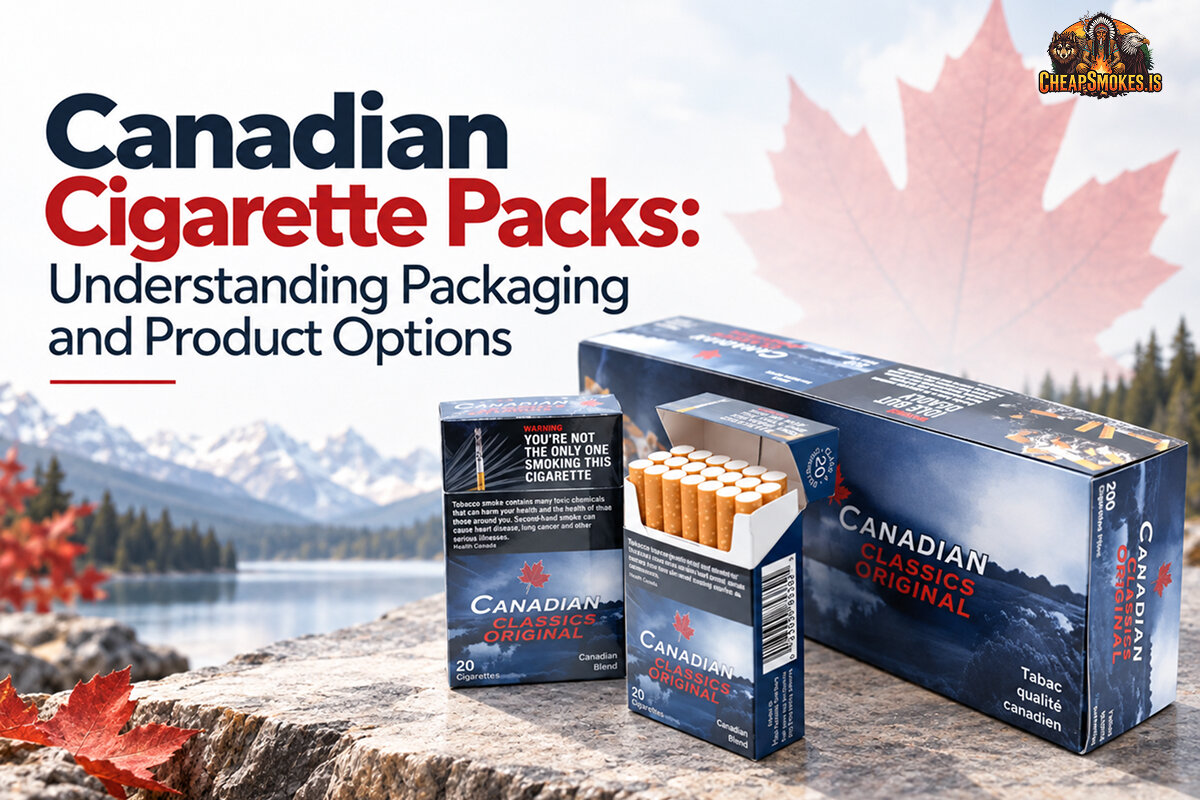
Canada’s current Tobacco Products Appearance, Packaging and Labelling Regulations require standardized packaging and extensive health-related messaging. Health Canada states that most tobacco packages must carry health warnings covering at least 75% of the primary display area. The regulations also require toxicity information and, for several cigarette-related products, warnings directly on individual products. (Health Canada, 2026)
Therefore, when you see Canadian cigarettes in standardized packs, that appearance is not simply a branding choice. It reflects federal regulation.
Looking for popular Canadian tobacco products? Explore our Best Sellers collection to see customer-favourite options available at CheapSmokes.

What Tobacco Products Are Available in Canada?
The tobacco Canada market includes several product categories, although availability varies by province, retailer, manufacturer, and current regulation.
The most familiar category is manufactured cigarettes. Federal law distinguishes cigarettes from cigars, little cigars, and tobacco sticks, while also setting rules for package size. For cigarettes, little cigars, and blunt wraps, federal law generally requires packages containing at least 20 units. (Department of Justice Canada, 2026)
Other categories within tobacco Canada include cigars and little cigars. Canadian regulations define a cigar separately from a cigarette and establish product-specific packaging and labelling rules. Little cigars are also treated distinctly in several areas of the regulatory framework. (Department of Justice Canada, 2026)
Explore tobacco consumption patterns, product trends, and consumer insights shaping tobacco use in Canada: Tobacco Use in Canada: Trends, Products, and Consumer Insights
Loose tobacco remains another part of the market. This can include cigarette tobacco used for roll-your-own cigarettes and pipe tobacco. Health Canada’s labelling framework specifically addresses cigarette tobacco and pipe tobacco, including requirements for health warnings and toxicity information. (Health Canada, 2026)
Smokeless tobacco, such as chewing tobacco and snuff, is also recognized within Canada’s tobacco regulatory system. Health Canada warns that these products still contain harmful and addictive substances and can increase the risk of oral and throat cancers as well as serious dental problems. (Health Canada, 2026)
There are also tobacco products designed for use with devices. Health Canada’s current labelling materials include a category for “tobacco products intended for use with devices,” showing that the Canadian framework extends beyond conventional cigarettes, cigars, and loose tobacco. (Health Canada, 2026)
One thing consumers should not assume is that every flavour or product format found in another country will also be permitted in Canada. The federal Tobacco and Vaping Products Act restricts various additives, including menthol in tobacco products sold domestically, subject to specific exceptions in the legislation. (Department of Justice Canada, 2026)
As a result, the tobacco Canada assortment is shaped as much by regulation as by manufacturer preference.
Learn about Virginia tobacco, its characteristics, curing process, and role in Canadian tobacco products: Canadian Virginia Tobacco: Understanding Its Characteristics and Popularity
What Are Popular Tobacco Brands in Canada?
When people search tobacco Canada, brand names are often one of the first things they want to understand. However, there is an important accuracy point here: there is no continuously updated public government ranking showing which cigarette brand is currently number one nationwide.
A better approach is to identify established brands currently associated with major Canadian tobacco manufacturers or brands that have maintained a longstanding presence in the country.
JTI-Macdonald, for example, states that its primary Canadian brands include Export A, Macdonald, LD, American Spirit, Camel, Winston, and Logic. The company traces its Canadian history to Macdonald Brothers and Co., founded in Montreal in 1858. (JTI, 2026)
Philip Morris International identifies Belmont and Canadian Classics as important local cigarette brands in Canada. Rothmans, Benson & Hedges, its Canadian affiliate, also reports that its portfolio includes cigarettes and smoke-free products. (Philip Morris International, 2026)
Historically, names such as du Maurier and Player’s have also been strongly associated with the Canadian cigarette market. Older Health Canada research recorded du Maurier and Player’s among the most commonly reported brands at that time. However, that research dates from the late 2000s and should not be treated as a current 2026 national sales ranking. (Health Canada, 2009)
That difference is worth emphasizing. A brand can be well known without being the present-day market leader. Search results sometimes blur together brand recognition, retailer sales, historical popularity, and national market share.
For that reason, a useful tobacco Canada guide should distinguish between established names and verified current sales data instead of presenting unsupported “top brand” rankings.
Learn what influences tobacco pricing, product value, and affordability factors in the Canadian market: Affordable Tobacco Canada: Understanding Value and Tobacco Options
How Do Canadian Tobacco Products Differ?
Within tobacco Canada, products can differ in format, dimensions, tobacco blend, filter design, manufacturer, and intended method of use. However, federal packaging rules make visual differences much less prominent than they once were.
Canada introduced standardized tobacco packaging requirements that limit colours, logos, fonts, and other branding elements manufacturers can display.
Health warnings are another major difference. The Tobacco Products Appearance, Packaging and Labelling Regulations introduced warnings directly on individual king-size cigarettes first, followed by regular-size cigarettes, little cigars with tipping paper, and tubes. Retail implementation for those product categories was phased in through July 2024 and April 2025. (Health Canada, 2026)
The rules continued evolving in 2026. Manufacturers were required by July 31, 2026, to sell and distribute cigarette packages using the new extended upper slide-flap placement for health information messages. The corresponding retailer deadline is October 31, 2026. (Health Canada, 2026)
That means any article about tobacco Canada should be dated carefully. Packaging seen several years ago may no longer reflect today’s compliance requirements.
Products also differ in their method of use and exposure, but “different” does not mean safe. Health Canada states that cigar and pipe users can experience the same types of health problems as cigarette smokers, while smokeless tobacco carries its own serious risks. Nicotine is primarily responsible for tobacco dependence and addiction. (Health Canada, 2026)
Finally, legal availability can differ across Canada. Federal law prohibits selling or providing tobacco to anyone under 18, while some provinces have raised their minimum legal age to 19 or 21. Provincial and territorial governments may also impose additional rules concerning retail sales, smoking locations, and promotion. (Health Canada, 2026)
Explore different tobacco categories available in Canada, including cigarettes, cigars, loose tobacco, and other product types: Canada Tobacco Products: Understanding Available Tobacco Categories

Where Can Consumers Learn More About Canadian Tobacco Options?
For reliable tobacco Canada information, it helps to separate three types of sources.
First, use Health Canada and the federal Department of Justice when you need regulatory or health information. These sources explain the Tobacco and Vaping Products Act, packaging rules, labelling requirements, health warnings, prohibited additives, and federal age restrictions. Because these rules can change, official government sources should take priority over older blog posts. (Health Canada, 2026)
Second, manufacturer websites can be useful for confirming current corporate portfolios or ownership. For example, JTI’s Canadian corporate page identifies its primary Canadian brands, while Philip Morris International provides information about Canadian brands and its Rothmans, Benson & Hedges affiliate. (JTI, 2026; Philip Morris International, 2026)
If your goal is to understand the broader tobacco Canada landscape, start with product categories and regulations first, then research individual brands separately. That approach provides better context and reduces the risk of relying on outdated packaging, discontinued variants, or unsupported market-share claims.
For adult readers of legal age who want to continue learning about tobacco Canada, visit CheapSmokes for additional Canadian tobacco guides, brand information, and product-related resources. Always follow the tobacco laws and minimum-age requirements that apply in your province or territory.
Understand how online tobacco shopping works, including delivery considerations, retailer factors, and availability across Canada: Tobacco Delivery Canada: Understanding Online Tobacco Shopping Options
Final Thoughts on Tobacco Canada
Understanding the tobacco Canada market means looking beyond individual cigarette brands. Product categories, packaging requirements, health warnings, federal regulations, and provincial rules all influence what consumers see and what is legally available across the country. Because these requirements can change, checking current information from Health Canada and other official sources remains important.
If you want to explore more about Canadian tobacco products, cigarette brands, and related guides, visit CheapSmokes for additional information and resources. Always follow the tobacco laws and minimum-age requirements that apply in your province or territory.
Disclaimer: This content is for informational purposes only and does not encourage tobacco use. Product information, availability, and regulations may vary by location. Always follow applicable laws, age requirements, and local tobacco regulations.











[…] in exploring more about Canadian tobacco products? Check out our Tobacco Canada guide for a broader overview of tobacco categories, brands, regulations, and market […]
[…] in exploring more about Canadian tobacco products? Check out our Tobacco Canada guide for a broader overview of tobacco categories, brands, regulations, and market […]
I found the section about standardized tobacco packaging particularly interesting. I knew Canada had strict packaging rules, but I didn’t realize how much the requirements had changed in recent years. It would be interesting to see a separate article explaining how these rules differ between provinces.
This guide does a good job explaining why product availability can vary across Canada. I especially liked the point that a well-known brand doesn’t necessarily mean it is the current market leader. Are there plans for a more detailed comparison of the major brands mentioned in the article?
There’s a lot of useful information here, especially for someone trying to understand the Canadian tobacco market rather than just individual products. The explanation of federal versus provincial requirements was helpful. I’d be interested in reading more about how tobacco regulations affect availability in different provinces.
[…] in exploring more about Canadian tobacco products? Check out our Tobacco Canada guide for a broader overview of tobacco categories, brands, regulations, and market […]
[…] in exploring more about Canadian tobacco products? Check out our Tobacco Canada guide for a broader overview of tobacco categories, brands, regulations, and market […]